Showing posts with label Game Design. Show all posts

Friday, August 28, 2015

Pax Stellarum 2.0 - Alfa Version Released!


I finally finished revising my spaceship gaming rulest, Pax Stellarum. I've thoroughly revamped every section of the rules, and implemented quite a few changes, but the core of the game, how it feels and plays, remains unaltered.

Here is the link to the Google Drive Folder:


There you'll find both the .doc and the .pdf version of the rules, as well as some quick reference sheets of Special Orders, Critical Hit table and some cut-and-paly tokens. There is also the brand new Design Tool Excel Spreadsheet, which comes with several stock ship designs of major sci fi universes. I'll be adding more and more "official" Pax Stellarum stats for famous ships over the next weeks, so that one file is going to get constantly updated on the folder. But the idea has always been having a design system that allows players to come up with stats of their own, and the Design Tool is there to help you do just that!

You can also find the permanent link to the Pax Stellarum folder on the middle of the column to the left on this blog, so it's always just a click away!


The most fundamental changes on this second edition are:

- Terrain Movement: It felt odd to have elements of terrain moving around the table. Scalewise, in the timeframe of a battle, any microcosmic changing of position of celestial bodies should be imperceptible to ships, anyway.

- Basic To-hit Number: On the original version of the rules, each ship had a Profile, based on its size, that constituted the basic to-hit number enemies need to match to score a hit. On this second edition, I've implemented rules for Quality, which replace the original "Spacefaring" Stat. Now, ships hit their enemies based on their own Quality, and the enemy Profile is now a modifer to this role, only. 

Quality now becomes one of the most important stats on a ship, for it determines its to-hit number not only for shooting, but for Skill Checks (to take on Special Orders and such) as well as Morale Checks.

- CTM and Projectile Weapons: On version 1.0, Countermeasures could only be used against weapons classified as projectiles. I've changed that so that now it's effective against any weapon. This, in turn, makes the distinction between energy based and projectile weapons irrelevant, and thus I've done away with that element. The reason for these changings is to make CTM a defensive system complete on its own, so to better represent those sci-fi universes where ships don't have Shields at all.

Still, CTM plays differently from Shields, they have distinct mechanics and feel unique. They each have both pros and cons, in terms of gameplay and design process (cost, mass, etc.), so plays hopefully won't have the feeling of being playing the same thing only with different names.

- Damage and the Spiral of Death: On the original version, the rules determined the loss of dice for weapons and overall combat effectivenes in relation to the amount of damage a ship suffers. Although this may seem more realistic in terms of naval warfare, in practice this meant that a ship woud quickly become useless once it started taking damage. Now the rules determine that if loses 1 point of Quality instead, which is bad already, but still manageable.


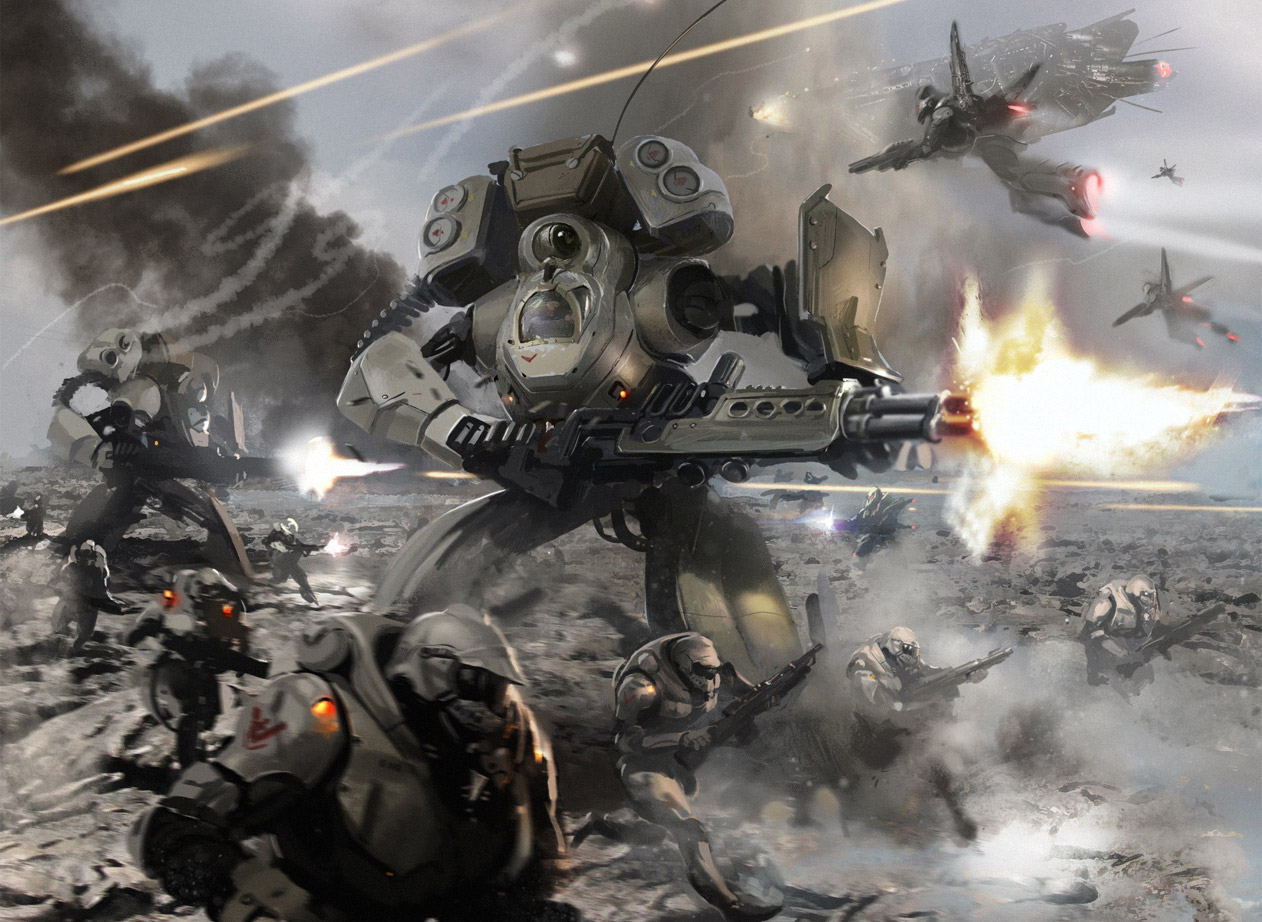
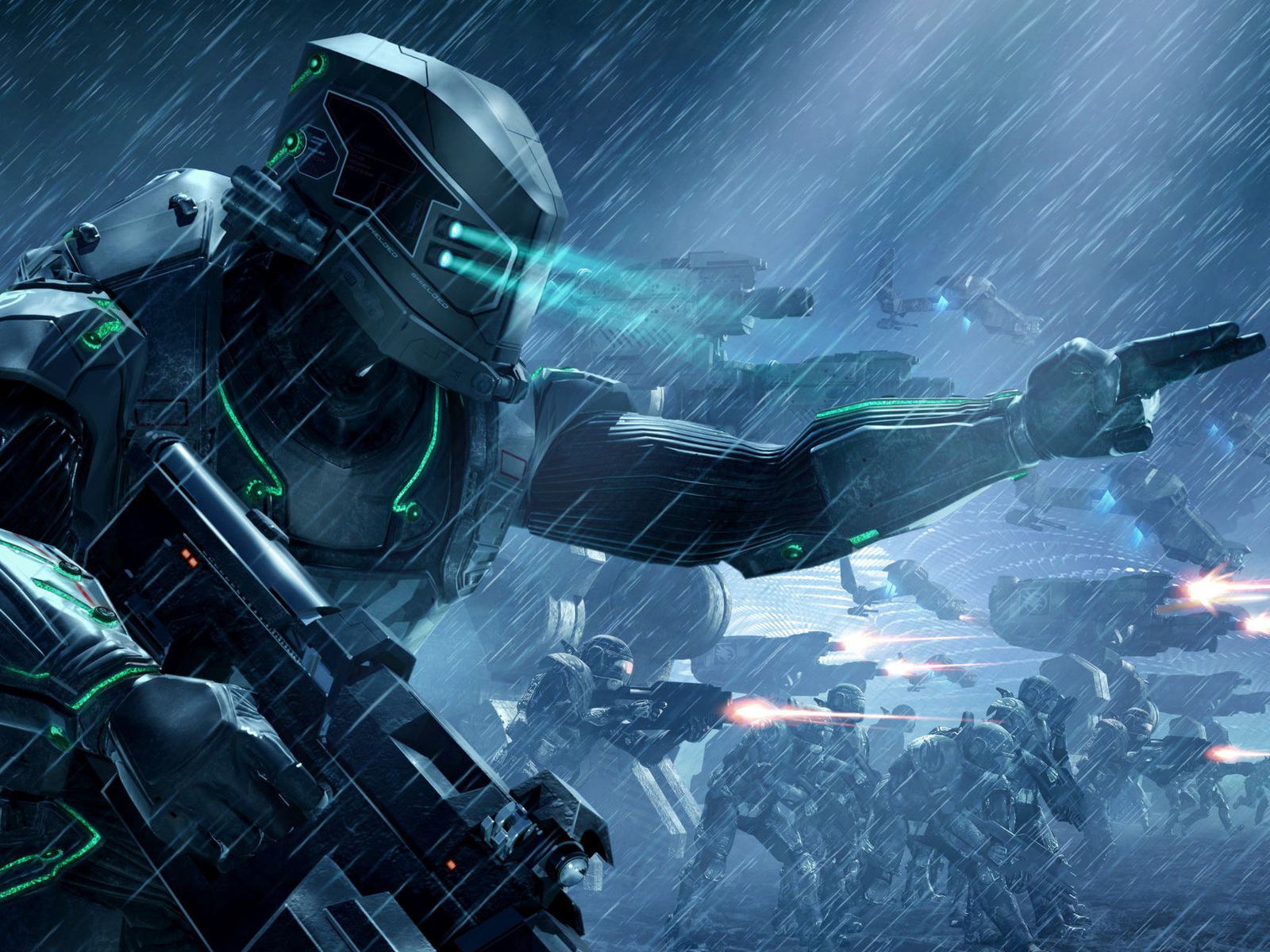
The are a lot of other minor changes to the rules on this new version, mostly aiming at making the game flow better. The new rulebook has also seen a revamping on its visual, and now portrays a plethora of beautiful pics of starships and space battles, so to make the reading process less boring and more inspiring, instead.

This is still version Alfa of the 2.0 Rules, which means playtesting may determine the need for some adjustments, but overall I feel pretty good with how the rules are right now. There is also the need of editing my writting (english is not my natural language), but my trusty colaborator Tim White accepted the challenge once more, so this should get done over the next weeks or so.

Go ahead, take a look, play some games and contribute with some feedback!


Friday, January 23, 2015

Para Bellum - Rules for unit activation

Work continues in my scifi ruleset, Para Bellum. Today I'd like to talk about the rules for unit activation. The goal behind these rules was to come up with a system of activation that is engaging and gives options to players, outside the narrow box of "move then shoot" that most rulesets fall into, which is so boring and outdated.
With these rules presented below, I have a system that integrates an unit's own initiative with suppression and command & control very easily. Also the number of options units have upon activating, due to the multiple types of actions and possible combinations among them makes for a system that is simple at one hand, but rich, deep in tactical possibilities in the other.
Here we go:


When it’s a player turn to activate a unit, he simply declares which unit he’s activating, and then rolls a D6 to determine the number of Action Points that unit has for the current activation.


Result of the D6

Nº of Action Points
1
1
2-5
2
6
3

The action points available for a unit are used to take actions. Once a unit is done taking actions, that activation is over, initiative passes to the opponent, and that unit will only be able to activate again on the next game turn.
Units take actions as a whole, and they apply to all models in it.
Actions are classified as either Short or Long, indicating they either require 1 or 2 action points to be taken, respectively.

Short Actions
·      Move!
·      Take Aim!
·      Fire!
·      Charge!

Long Actions
·      Run!
·      Fire!
·      Stand Ready!

·                                     Move! The unit is able to take a single move action, where each model is able to move up to its Movement Value, in inches.
·                                     Take Aim: The unit takes instance to fire, which makes its shoots more accurate.
·                                     Fire! The unit shoots with its available ranged weapons. If its taken as a Short Action, only non-heavy weapons may be fired. If its taken as a Long Action, all weapons may be fired, including heavy weapons;
·                                 Charge! The unit attempts to engage an enemy unit in close combat with a single move (just as in the Move! action).
·                                     Run! The unit is able to take a double move action, which means each model is able to move up to 2x its Movement Value, in inches.
·                            Stand Ready! The unit forfeits acting immediatelly to stand ready to react to enemy activity nearby.

Each action can be taken only once, but they can be combined with other actions, in any order, provided the unit has got sufficient action points to spend.
Thus, a unit with 3 action points may take a Run! Long Action folowed by a Fire! Short Action, or vice versa; or Move!, then Take Aim! and finally Fire! (as a Short Action), etc. A unit of 2 action points could instead Take Aim! and then Fire! (as a Short Action), or Move! and then Charge!, etc.
However, if a unit takes a Fire! action, it can only Charge! If all the weapons fired have the Assault Special Rule. If any other ranged weapon is fired, the unit cannot charge in the same activation.

Also, although not forbidden, it would make no sense to Take Aim! without a following Fire! action (either Short or Long), for the bonus to shooting provided by taking aim is lost if the unit doesn’t take a Fire! action on that same activation.


MODIFIERS TO Nº OF ACTION POINTS:

There are 2 modifiers that apply to this D6 roll for action points:
·         Stress Points
·         Order to Take Action!

Each point of Stress on a unit reduces the number of action points available to it by 1. Thus, a unit with a single point of Stress cannot get 3 action points, unless given an order. It can even get no action points at all, if it rolls a 1(!).
When a unit is ordered by a HQ to Take Action! (see next topic, Command & Control), it increases its number of action points available by 1. Thus, a unit given an order to Take Action! get at least 2 action points in total, and has better chances of getting 3, provided it doesn’t have Stress points, also.
 Regardless of orders, a unit can never have more than 3 action points. Note that an order is issued to the unit BEFORE  it rolls the D6 for action points, so its involves a risk of spending Command Points in vain (in case the roll of the D6 is a 6).
Both Stress and Take Action! modifiers are combined and then applied to the result of the D6 roll. It may result in the unit getting no action points at all, if the result of  “modifiers + action points of the D6” is equal to or less than 0, or getting 3 action points, if this result is equal to or greater than 3.


______________
Ex 1:
A unit currently with 2 Stress points is activated. The player decides to have a HQ give it an order to Take Action!, and spends a Command Point to do so.
He then rolls a D6 to determine its number of action points for this activation, and gets a 3, which means the unit gets a 2 action points.
Now, the modifiers of Stress points (-2) and Take Action (+1) are applied, for a final total of a single action point.
Had the unit not been given an order, the 2 stress points on it would completely negate the action points rolled on the D6, and the unit would be unable to act at all in this activation.

Ex 2:
A unit currently with no Stress points is activated. The player decides to have a HQ give it an order to Take Action!, and spends a Command Point to do so.
He then rolls a D6 to determine its number of action points for this activation, and gets a 6, which means the unit gets 3 action points.
Because no unit may have more than 3 action points in an activation, the order to Take Action! is of no effect.
______________