Showing posts with label Star Wars. Show all posts

Thursday, April 5, 2012

My 2012 Wishlist

I have so many interests involving spaceship miniatures and wargaming in general that I try to have some sort of annual planning to purchase them all.

In my current wish list, for instance, are all fleets of Galactic Knights (Starfleet Wars), Stargate and the Sorylians from Firestorm Armada, not to mention the last fleet missing on my Babylon 5 collection: The Earth Alliance.

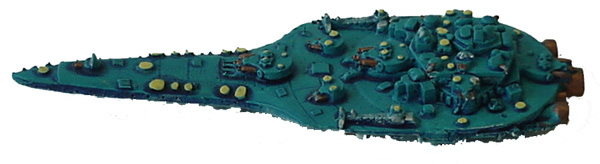
Sorylian Dreadnought


Aquarian Leviathan Class Dreadnought

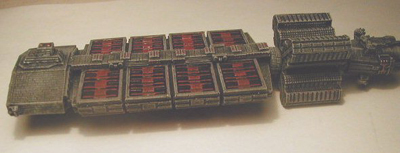
Ancient Cruiser


Earth Force Poseidon Super Carrier

Oh, and there is also the Mon Calamari, which I'm in need to make up a rebel fleet to oppose my Galactic Empire forces...

Mon Calamari Class 85 Cruiser

My gaming budget allows me to get a fleet each month, so it's going to take me all remaining months before the end of the world in december (?) to hit my entire current wish list.

The situation would be somewhat manageable if spaceships were my only gaming interests, but (unfortunatelly) they aren't...

I'm also building not one - or two - but three Warmachine armies: Khador, Cygnar and Menoth. The minis are not only gorgeous but a lot of folks on my local gaming club are playing it, so, several potential adversaries! 

(I mean, come on... How am I supposed to resist THAT?)

What about you guys? Do you have an annual gaming purchase planning as well?

*End of Transmission*

Monday, February 20, 2012

Pax Stellarum: Dindrenzi x Star Wars Empire

Yesterday I played another battle: A 1900-point game with the Dindrenzi and the Star Empire.


The Dindrenzi had a Conqueror Class Battleship, 2 Fury Class Cruisers and a Claymore Class Carrier escorted by 4 Buckler Class Corvettes.

The Empire had 7 Star Destroyers, with a handful of Tie squadrons onboard.

I used a token as a reminder of which Destroyer was the Flagship (one could say I really like tokens...)

The Empire was attempting to reach a terran planet occupied by Dindrenzi troops (20, to be precise), and bomb the enemy, thus paving the road for a following invasion.

The game begins with both sides maneuvering to bear their broadsides to the enemy, as both fleets are stronger there than on their prow.

The initial exchange of fire damages a Fury, while the squadron moves away in order to deploy mines along its path. The Tie fighters, too small to trigger the explosives, are dispatched to try inflicting further damage to the cruiser with reduced Shields.

Note the Empire Flagship, on the middle of the table. I made the terrible mistake of placing the flagship in position to receive enemy fire from all sides...

On the upper side of the table, the Dindrenzi Carrier started launching its complement, and more Tie squadrons had to be activated to intercept them and stop those from firing at the Star Destroyers.

The Imperial Flagship is heavily damaged by the Battleship's broadsides and the Furys' prow torpedoes. 

The Star Destroyer and its trail of tokens. It got Shields reduced to 50%, which then collapsed alltogether, with a critical; more criticals on Sensors, both Target Control Systems, Stern weapons and Power Core.  It was also reduced from 15 to 3 hull points. Now that's what I call a crippled ship...

Another Star Destroyer squadron was doing away with the carrier's escorts. One destroyed and another damaged. Here is something we don't see everyday: a small ship with a critical hit. They usually die before having any, as they have so few hull points.

The battleship  reverts additional power to engines to move faster, thus crossing the mine field in a single turn's movement; after all, not even a battleship wants to be surrounded by mines in case they go off.

In consequence, it had less power available for weapons. A pitty, really, as it had an imperial squadron on the perfect spot for a full broadside fire. It even attempted locking tractor beam on the nearest enemy, to no avail.


The mine field grows longer, as the Furys keep deploying mines while chasing the enemy flagship. By then, it was attempting to hide behind an asteroid strip, to survive longer and keep the fleet from having to roll a morale check.

The Dindrenzi bombers were chasing it like piranhas after a bleeding cow crossing the river.

Meanwhile, the Ties finish a Fury. Too many Ties on your rear, and too low Shields to defend your hull is a nasty combination. 

The Dindrenzi bombers retribute the favor most galantly: The imperial flagship is doomed shortly after.

The Empire gets rid of a couple more enemy corvettes, and then chooses to head for the planet and start bombing it.

On the other side of the table, one Star Destroyer manages to avoid the minefield for just that much, but the other (on the center of the pic above) is brought by inertia within the mines' range, and the entire field goes off. 

The Ships survive, but the Tie fighters that had just scored a kill on a Fury Cruiser are lost.

With the path now clean, more Star Destroyers approach the planet, and orbital bombardment starts. The Dindrenzi Battleship has now got a long way to go to be able to properly maneuver and bear its batteries at the enemy once again.

On the right corner, we can see an imperial ship surrounded by Dindrenzi bombers, which failed to inflict a single hull damage on it. Turned out fighters are effective only once ships start losing Shields. Until then, there is just so much they can do.


The game ends shortly after, due to the imperials failing the morale check for losing the flagship, but not before they finish the remaining enemy cruiser. Regardless of leaving the battle, the victory was theirs, once victory points were calculated.

My remarks; Fighters are working better, but I feel I still need to improve them a little. Other than that, the system is working smoothly. 

The are still some buts, though. It took 3,5 hours to play 4 turns. Again, it ended with too few turns, and each took too long to play. 

I'm already considering some changes to be done to address those issues. Minor things that I believe are going to make a big difference. The morale check, for instance, could be easier to pass, considering that the imperials were clearly on their game here. I'm going to add a modifier to work on these cases. That would make the game last more turns.

As for the length of each turn, the dierolls are probably going to need some tinkering to work faster.

More on that soon.

*End of Transmission*

Tuesday, January 24, 2012

Scale of Power for SciFi Races

One of the things I enjoy about spaceships Sci Fi is classifying all my favorite races into categories of Power Projection Capabilities.

In order to do so, I have to extrapolate a little on the current theory for types of powers on literature, to fit them in terms of outer space power projection.

So, I came up with the following suggestion:

Races may be classified on planetary, galactic and cosmic (!) levels.

Races that are capable of projecting power only within their own homeworld, to a greater or lesser degree, are classified under the current theory of power status (local power, regional power, major power, superpower, etc.), and fall under the planetary power category.

Races capable of projecting power over stars on their home galaxy are classified under the galactic status. And here is where my (silly) ideas thrive...

Galactic Level Powers may be: Interplanetary Powers, Local Powers, Regional Powers, Major Powers, Superpowers, Hyperpowers.

Interplanetary powers are races capable of projecting power on their own solar system, as well as on nearby systems, up to a few light years distant. Example of this on Sci Fi would be the Bajorans, from Star Trek DS9.

Local Powers are capable of projecting power over an area of space up to a few hundred light years from their homeworld. Ex: The Ferengui Alliance, the Gorn Confedaracy, both also from Star Trek.

Regional Powers are races with suficient capabilities to project power over an area a few thousand light-years around their homeworld. Here is where I believe most "major" powers in Sci Fi would fall into. Ex: Federation, Romulans, Klingons, Cardassians, Centauri Republic, Earth Alliance, Narn.

Major Powers are able to project power in a region of the galaxy far from their own territory. Ex: The Dominion, from Star Trek, the Centauri Republic in the past and the current Minbari Federation, from Babylon 5.

The main difference between a Regional Power and a Major Power could be seen in the Deep Space 9 series: The Dominion could fight a war on the Alpha Quadrant with extreme efficiency, though very far away from home. Could the Federation and its allies do the same? They could barely defend themselves from the Dominion Assault on their own backyard.

Superpowers are races capable of projecting power not only over far regions of the galaxy, but virtually anywhere in it. Ex: The Borg Collective, the Vorlon Empire.

Hyperpowers are those capable of projecting power on the entire galaxy (superpower), in a galaxy where there are no (other) superpowers or major powers. Therefore, their extreme power is unopposed.

As examples of this, we have the Galactic Empire, from Star Wars, and the Wraith on the Pegasus Galaxy, from Stargate Atlantis.

The Borg are classified here as a Superpower, rather then an Hyperpower, precisely due to the presence of the Dominion (a major power) in the Milky Way. Such race has suficient capabilities to oppose Borg interests on far reaches of the Galaxy.

The same happens with the Empire of Men, from Warhammer 40k, which would also fall into the category of Superpower, as its is capable of projecting power on the entire Galaxy, but can be effectively opposed by other superpowers or major powers (the Eldar, the Orcs, the Tau, The Necrons, etc.)

Finally, we have the scale for Cosmic Power. It is even more theorectical than what stated above, as it would imply assuming races could project power much beyond the limits of their home galaxy (!).

But anyway, here too we would classify races as Intergalactic Cosmic Powers, Local Cosmic Powers, Regional Cosmic Powers, Major Cosmic Powers, Cosmic Superpowers and Cosmic Hyperpowers.

Intergalactic Cosmic Powers are those capable of projecting force on nearby galaxies. They are assumed to be Superpowers or Hyperpowers on their own home galaxy. Ex: Species 8472, from Star Trek (and probably The Wraith, from Stargate, is too, as I don't recollect if they were able to travel among galaxies).

Local Cosmic Powers can exercise power on a few hundred galaxies around their own. Right now, I can't think of any Sci Fi race that have gone so far. But I have one of my own that reaches that level of power: The Citri!

They are so powerful they can submit entire galaxies, millions of light-years away from Citrar, their home galaxy...

The next level would be Regional Cosmic Powers, which would be those capable of projecting power over thousands of galaxies. Again, no Sci Fi race hits me right now. But I have one of my own here, too:

Beyond that, there would be the Major Cosmic Powers, which would be those races capable of projecting power over millions of galaxies. No, not even I have something to fall into this category... 

Next, Cosmic Superpowers would be those capable of projecting power over the entire Cosmos (!)

Finally, a Cosmic Hyperpower would be a race capable of projecting power over the entire Cosmos, if there was no other Cosmic Superpower or Major Power.

The rest of my own fictional races would almost all fall under the Galactic Regional Power category, such as the Oberons, the Calinori, the Burbassi and the Vidrians.

The Carmakian Empire is a Major Galactic Power, and the Alliance of the Worlds, a Galactic Superpower, although each member on the Alliance, separatedly, would at best be classified as a Local Power.

What do you guys think of that? Does it make sense? What other races would you classify under these categories?

*End of Transmission*


Sunday, January 8, 2012

The Galactic Empire

I've already shown my Galactic Empire Fleet here, but since then it changed somewhat, so let's take another look at it.


Basically, I did a black wash on all ships, including the Death Star. Additionally, I finished painting my Tie fighters, from Studio Bergstrom:

Tie Bombers


Tie Interceptors


Tie Fighters

All those fighters have different stats on Pax Stellarum. In fact, with the fighter design rules, I can create different fighters for virtually any race on Sci Fi.

As a rule, ships in Pax Stellarum are considered to ocuppy only the point in space where their flight peg is, and therefore all measures (movement, range) are taken from there. However, an exception can be made for some massive ships such as the Death Star.

On such cases, the actual model is taken as reference, rather then its flight peg. It is considered to ocuppy the space on the game board where its "shadow" is - the imaginary projection of its silhouette on the game surface.

It works quite well for my Micro Machines Death Star, which is pretty much the size of my moons.

I'm going ahead with playtesting. I believe a couple more full-scale tests may be enough to settle all the rules not yet fully tried out.

*End of Transmission*


Wednesday, January 4, 2012

The Empire Strikes Back (Does It really?)

Last Evening I got to play another full scale betatesting game of Pax Stellarum. This time it was a 2000 point game opposing the Galactic Empire of Star Wars to the Diplomatic Corps Fleet, from Zandris IV.

Here is what the table set up looked like:


Diplomatic Corps right flank


DC center formation: The Battleship "Guardian of Earth" escorted by a squadron of 4 destroyers


DC left formation: The carrier, along with its complement of Interceptors and Bombers, and escorted by a squadron of cruisers

The left and right Empire flanks each had a squadron of 2 Star Destroyers along with its own Tie fighters/bombers. Here I used my all-duty standard fighters to represent the Tie's, as the real ones are still on drydocks waiting their turn to get painted...

The Empire center formation had a Super Star Destroyer, escorted by a squadron of regular Star Destroyers.

The Diplomatic Corps had overall superior Spacefaring, and so the Empire had to begin the movement phase. The later had one Star Destroyer squadron on the left made a bad move, which rendered them out of range until the 4° turn (!)

This's what I'm talking about: The Star Destroyers here tried to get to the rear of the enemy by going around the planet. Instead, they should have settled for the enemy flank, and had followed their fighters. Also, note that the Diplomatics paved their way with mines all over, so to prevent the enemy flanks from getting too close.

The fighters made a run for each other and almost all got entangled in dogfighting. Meanwhile, the Diplomatic Corps made it full ahead to the Super Star Destroyer.

The DC Battleship attacked the SSD, and its escorts (2 Star Destroyers) imediatelly interrupted the enemy attack and stroke back. The interruption of enemy attack is a prerrogative of a ship/squadron commisioned to escort an ally, when such ally gets attacked.

As the Star Destroyers declared an interruptive attack on the DC Flagship, the Batleship's own escorts were allowed to interrupt that attack as well. And they did.

So we had the following situation: The destroyer squadron, escorting the DC Battleship, would attack the Star Destroyers escorting the SSD. If those Star Destroyers survive the attack, they would then attack the Battleship.Finally, if that ship remains in game after that, then it would be able to attack the SSD.

Well, turned out the Battleship escorts crippled the Star Destroyers, inflicting severe hull damage and multiple critical hits on both of them.

Here, D'20's indicate the critical hits. I'm still waiting some tokens I ordered from Litko to represent those hits more fashionly.

The Star Destroyer on the left lost one Target Control System and was also unable to fire from its Prow Arc. The one on the right had a Bridge impact, and could not perform any action until the end of that turn. Additionally, it had its Life Support System damaged, which would cause it to lose 1 crew point every turn.

With the SD's out of action, they could not go ahead interrupting the Battleship's attack, and it was then finally able to carry on that action, scoring some hull damage to its bigger counterpart.

The Empire squadron on the right flank had the idea of firing at the enemy mines so they would go off, hitting the very ships that deployed them. It worked quite well, and I learned the lesson: Never deploy mines too close to where you're going to end your movement.

As each mine pictured above was within range of each other, when one of them blew up, it caused the one next to it to do the same, and so on... 

With 3 mines exploding so near the DC carrier and escorts, they needed a miracle on Shields roll to survive.

The carrier made it, with incredible four 6's on four Shields rolls. Its escorts, however, were history...

With the path cleansed, the SD's on the right flank (left of the table) could advance and chase the enemy from the rear. The other imperial flank just realised it would have to go around the mine field and asteroid belt to get to the enemy. Targeting the enemy mines wasn't a viable solution here, as too many allied tie fighters were near it.


By the end of the 2º turn, both flagships were lost, and the fleets had to pass a morale check to remain on the field. They both succeded, and so the game went on.

On the 3° turn, both fleets got under 50% of total hull points, and so another morale check had to be passed. They both failed, and so prepared to leave the table into hyperspace on the end of the 4° turn.

The imperial left flank finally got to fire at something, but it was too late to make any difference, as they were all that was left of the Galactic forces on the battlefield, along with several tie squadrons.


At the end of 4° turn, both fleets jumped into hyperspace. The game was over, and it was time to check victory points for each side.

The remains of the Diplomatic Corps forces, clearly victorious


And here are the galactics. Don't know if they survived because they stayed out of combat for most of the game, or if the rest of its fleet died for lack of their support. Probably both.

The casualties of the DC

The casualties of the Galactic Empire

After checking victory points, the Diplomatic had the day, with 174 points against 87 for the galactics.

Overall, it was a good game. I liked the fact that many fighters survived until the end. I'm not particularly fan of the idea of fighters being treated as disposable ordnance. It's not realistic if we assume there would be people in there. Not only people, but highly skilled/trained pilots, not the kind you can afford to lose so easily.

I'm also pretty satisfied with how the Morale Checks are working. The game ends when at least one side fails to find disposition among their own ranks to stay in battle.

This allows for games that end with both sides still at considerable forces. Here again, it adds much more realism to the game than having to believe opposing sides would fight to the last ship, or near it.

The down side is perhaps the game taking 4 hours to resolve, which brings it to an average of 1 hour a turn. But as I deliberately stretched the game point beyond what I believed would be reasonable (about 1500-1850 points), I guess its understandable.

And the funny thing about that is that this second trial took the same 4 turns to be played, despite the 33% increase in points played this time. The points addition didn't caused the game to have more turns, but rather longer turns. Don't know if its bad or good.

Anyway, hope you guys are enjoyng those battle reports. More will follow soon.

*End of Transmission*

Thursday, December 29, 2011

Some Vorlons and some Fighters

My small Vorlon fleet from Agents of Gaming arrived a couple days ago.


The reason it is so small is because the vorlon ships are so powerful, and therefore are going to be worthy so many points in any ruleset, that I'd hardly have a chance to field more than that on any single game.

I'll be painting them right away, along with the Minbari fleet, to post them on a contest going on on the Star Ranger Forum.

My Star Wars fighters, from Studio Bergstrom, also arrived this week. They came along with their silicon bases, which I already mentioned on a previous entry.

Fighters for the galactic Empire. Some Tie, some interceptors and some bombers.

And here are the silicon bases, ready to be cut out.

When I'm done painting the fighters, I'm going to post about them, but let me assure you those little toys from Drew, at Studio Bergstrom, are unbelievably detailed. Because of it, a little drybrush over a black basecoat is enough for them to look outstanding!

More on those vorlons and fighters in a few days (hopefully, painted...).

*End of Transmission*


Sunday, July 3, 2011

Inaugural Post - Some of my miniatures...

 Since I really enjoy reading blogs about miniature starships, I thought I should give a contribution myself. So, as an inaugural post, here are the pics of some fleets of mine.

The Romulan Fleet

The Borg Fleet

The Ferengui Fleet

The Klingon Fleet

The Chaos Fleet

        I wish I could take credit for that painting, but in fact I got almost all ships on this fleet already marvelous painted by Jeff Nall, from Battlework Studios. Only the battleships (most of them) and the Planet Killer were on me.

Chaos Hulks kitbashed by Jeff.

Pride of the Chaos Fleet...


Finnaly, the Galactic Empire Fleet.

    There are lots of more fleet I'd like to show here, but some are still work in progress, so, they'll be showing up on the next months, hopefully.